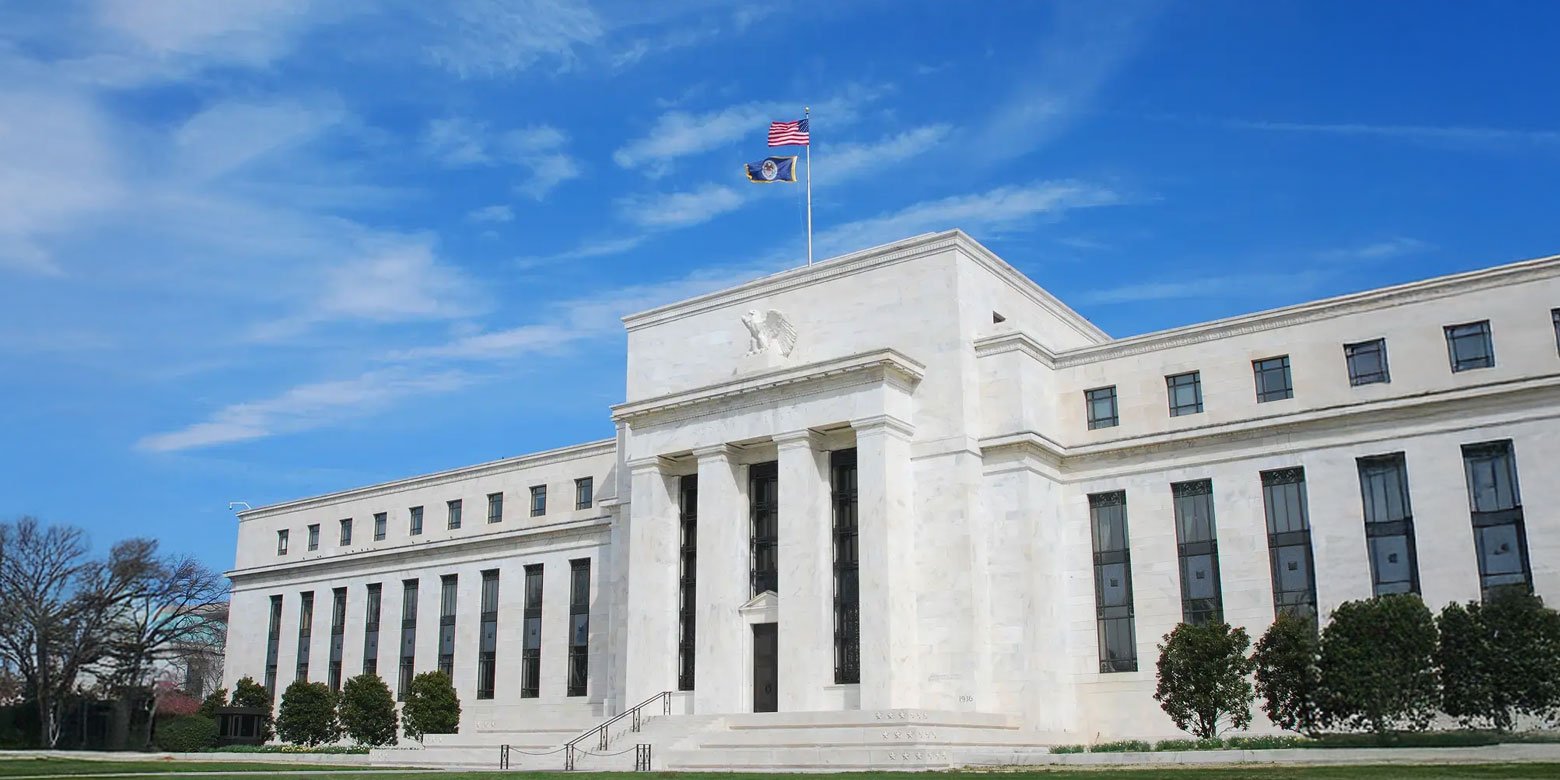
Central banks like the Federal Reserve—the Fed for short—can feel far removed from everyday life, but the truth is their decisions can have real, tangible impacts on your money. Every move can change the value of your stocks, the returns on your bonds, the interest you pay on mortgages, and the overall cost of credit.
Understanding how the Fed operates may help making investing a lot less confusing, and maybe even more intentional.
Interest rates are the biggest lever
The most powerful tool every central bank has, the Fed included, is the ability to set interest rates. In the United States, the Federal Reserve sets the Federal Funds Rate, the rate banks use to borrow from each other overnight.1 This single number ripples through most every corner of the economy, from the rates you pay on a car loan or mortgage to how much it costs for companies to borrow and grow.
Lower interest rates may fuel the market
When the Fed wants to stimulate the economy, it typically lowers interest rates. That should make borrowing cheaper for both businesses and consumers. Companies should thereby be able to finance expansion projects via borrowed money at a lower cost, potentially boosting growth and profitability that can lift stock prices.
But what’s potentially good for stocks isn’t necessarily good for savings accounts and government bonds. When the Fed cuts rates, these two assets usually offer lower returns. So investors may turn elsewhere, particularly the stock market, for higher returns. That increased demand for stocks can only drive prices up further.
Real estate also tends to benefit from lower rates, because lower mortgage rates make buying a house more affordable, which can lead to higher demand and property values.
Higher interest rates may slow the economy
Conversely, when the economy or inflation is overheating, central banks typically raise interest rates in an attempt to bring the economy back in balance. Theoretically borrowing then should become more expensive for everyone, leading consumers to save rather than spend and businesses to possibly delay borrowing money and expansion plans. In the end, overall consumer spending often slows.
Rising rates can also act as a headwind for stocks. Higher borrowing costs and debt servicing can squeeze corporate profits. Plus, other assets like bonds and savings accounts may start to offer more attractive returns, pulling money away from the stock market. That said, fixed income investors who already hold lower-yield bonds may see the value of their holdings decline as new bonds are issued with higher, more attractive yields.
Quantitative easing is another way to influence the economy
Sometimes, near-zero interest rates aren’t enough to stimulate a struggling economy. In this case, the Fed may turn to quantitative easing, or QE, a policy where the Fed buys large quantities of government bonds and other financial assets on the open market.
QE typically does two main things: It increases the money supply and it lowers long-term interest rates. By purchasing bonds on the open market, the Fed injects cash into the financial system. That added liquidity should encourage banks to lend and businesses to invest.
After the 2008 financial crisis, the Federal Reserve rolled out several rounds of QE, which many believe helped stabilize the financial system and support a recovery.
Historically investors also have tended to benefit from QE. In theory, when the Fed injects liquidity into the financial system, that money needs to go somewhere, and oftentimes it finds its way to the stock market, which may drive prices up.
The opposite of QE is quantitative tightening (QT), a policy where the Fed sells assets or lets them mature without reinvesting the proceeds. This reduces the money supply and can put downward pressure on asset prices.
The Federal Reserve manages inflation
The Federal Reserve operates with a long-term inflation target in mind, typically around 2%.2 It’s believed that a small, predictable amount of inflation is healthy for the economy. People are encouraged to spend and invest rather than hold cash, which would lose value over time.
The Fed uses its primary tool, the Federal Funds Rate or interest rates for short, in an attempt to keep inflation near this target. If inflation rises too far above the target, the Fed is likely to raise rates to cool the economy. If inflation falls too low or turns into deflation (when prices decrease), they may lower rates or consider QE to stimulate spending.
Inflation data can help investors anticipate the Fed’s next move. Persistently high inflation, as seen in recent years, signaled to many that the Fed should act aggressively and raise rates. This knowledge may have given investors a chance to make adjustments to their portfolios, possibly by reducing exposure to growth stocks that can be sensitive to higher rates3 and increasing holdings in assets that historically have performed well in an inflationary environment, like commodities or real estate.4
The takeaway
Understanding central bank policies is one thing, but applying that knowledge to your investments is another.
- Historically, stocks generally have done well in low-interest-rate and QE environments. They may face headwinds when rates rise, with tech and high-growth stocks particularly sensitive to increases.
- Bonds should have an inverse relationship with interest rates. When rates rise, existing bonds with lower yields should become less valuable. When rates fall, existing bonds with higher yields should become more valuable.
- Real estate may benefit from low interest rates because cheaper mortgages can lead to higher demand. Conversely, rising rates may cool the housing market.
Central bank policies are a major force shaping the financial markets both in the United States and around the world. While you can't control their decisions, you can understand the impact of their actions. By paying attention to interest rate announcements, QE programs, and inflation trends, it could be possible to better anticipate market shifts and position a portfolio to navigate the shifting economic tides.









 5 min read