








 5 min read


The days are longer, temperatures are higher, and your winter coats and sweatshirts are hibernating peacefully in the packing cubes found at the back of the closet – it must be summer. It’s also the time of year when we instinctively take our foot off the gas.
Your portfolio, however, doesn’t get a summer vacation. After all, market-moving news about inflation, geopolitics, and earnings season isn’t exactly taking a break.
So sit tight and let’s have a look at a few themes making the case for staying clocked in.
The AI Pool is Still Filling Up
First, it’s important that you know I wrote and re-wrote this section three times because where do we even start when it comes to the AI of it all? It seems like the leap from concerns over “wasteful AI spending” to “is AI eating the white-collar jobs?” happened in the blink of an eye. While I’m not one to prescribe a call to the broker every time a headline makes you think a little harder, I’m not so sure we can just check out of this conversation. So, what are a few things we know so far?
- Concentration of profits and market performance among the AI leaders is significant and watch-worthy.
- We’re still waiting on derivative effects of AI-based innovations and a proper understanding of labor market implications.
- Rapid Construction of data centers may not be quite such smooth sailing.
No Diving in Shallow Water
I loved spending time in the water as a kid. Whether it was a trip down the shore (some of you might know this place as “the beach,” but I’m from South Jersey) or hours in a pool, I wanted to be there. To break the monotony of Marco-Polo, we’d often dive for glow sticks, rings, or really anything waterproof that would sink to the bottom. Two key parts of this frankly timeless activity are reflected in today’s AI-centered market – you can’t play in shallow water, and you’d better have strong lungs.
Diving into deep water requires a higher risk capacity than walking in the shallow end. A balance of technique and muscular/cardiovascular endurance will ensure you make it to the bottom and back without your lungs feeling like they’ll explode. Back in May, the top ten companies in the S&P 500 accounted for around 34% of the index’s profits (Figure 1). To be clear, that’s 2% of the companies accounting for something like 40% of that index’s market cap, and one third of the profits. You have to have a little gumption to dive into this market.
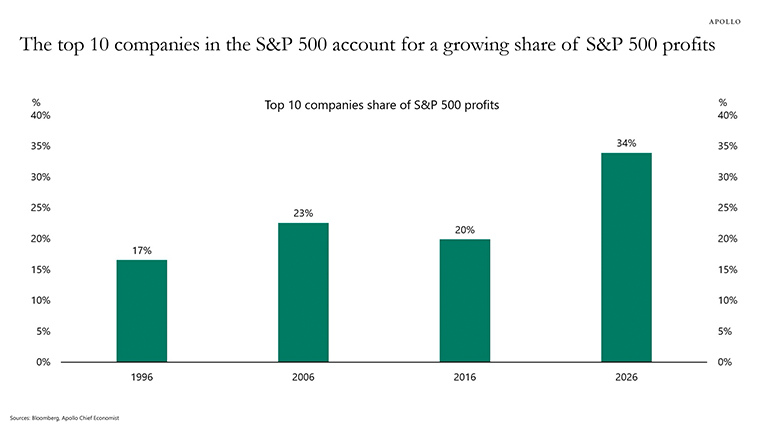
Figure 1: Apollo. “Top 10 Companies Account for 34% of Profits in the S&P 500.” Accessed July 4, 2026.
More recently, the implied volatility for the Nasdaq-100 has spiked compared to the S&P 500. This inflection, according to Dr. Torsten Slok of Apollo in figure 2, “… reflects investors demanding far more protection on AI names than on the broad market, signaling that perceived market fragility is now heavily concentrated in growth stocks while overall S&P volatility stays relatively calm.”
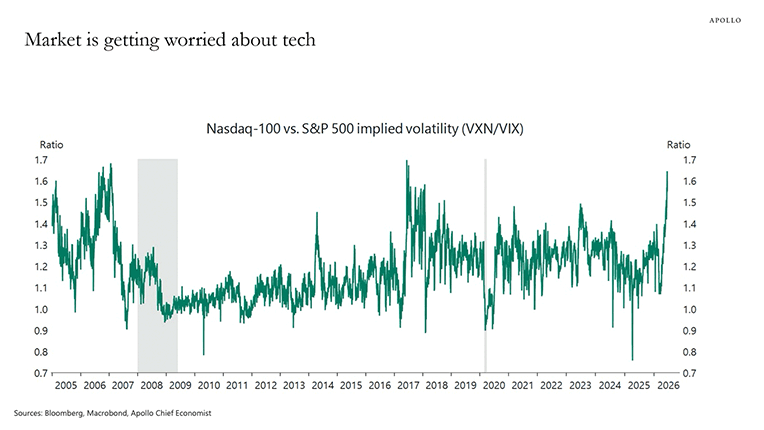
Figure 2: Apollo. “Options Markets Are Bracing for a Tech Shakeout.” Accessed July 4, 2026.
Once you’ve made the dive, you can tread, swim, or float, but there’s no room for just standing around. The market rocks and rolls on the whim of a handful of names, making the opportunity set for active investors potentially vast on any given day.
Concentration isn’t the only AI-related cause for pause. At the time of this writing, a major consumer tech hardware company recently announced some landmark price increases to compensate for memory cost increases. This was on the heels of a semiconductor company announcing blowout revenue and profits. While it seems obvious that chip makers can’t just reap the gains with zero consequences for the rest of the network, the market appears to just be figuring that part out. There are so many more companies lined up to answer the cost-demand question; taking the summer off just isn’t an option when volatility can create buying opportunities.
And since we’re talking about consumers, we might as well talk about labor, right? Now listen, I’m no Luddite. While I don’t use chatbots in my personal life, I find them and other AI tools extremely helpful in my work as an analyst and a PM. My team aims to live out Jevons' paradox – rather than being invalidated by these tools, we increase productivity and demand for our skills, optimized to reduce wasted time. When it comes to AI and employment in the U.S., Dr. Slok posits that Jevons' employment effect may already be underway. Instead of cheaper inputs shrinking industries, AI should increase productivity and employment economy-wide, citing declining unemployment for young people and a spike in business formation in this dawn of the AI-age (Figure 3 and Figure 4).
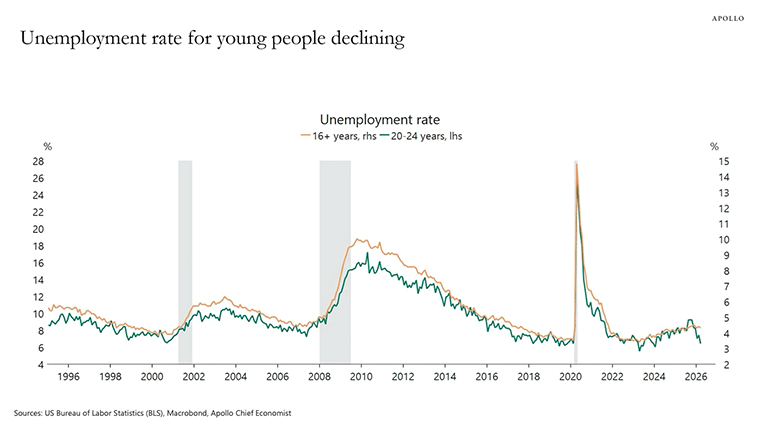
Figure 3: Apollo. “The Jevons Employment Effect From AI.” Accessed July 4, 2026.
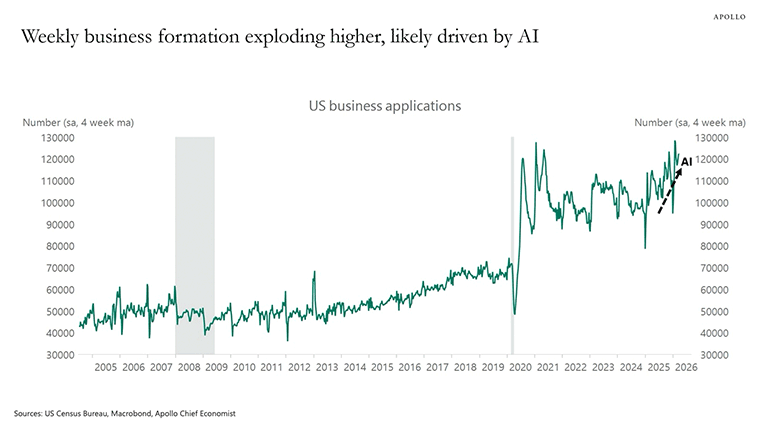
Figure 4: Apollo. “The Jevons Employment Effect From AI.” Accessed July 4, 2026.
Now you might be thinking, “but Shelby, this is completely at odds with everything I’m seeing on social media. Surely there’s a misinterpretation of the data.”
I’m afraid I’ll have to disagree with you, friend. Well, at the aggregate, at least. From a bird’s eye view, the gains and losses should shake out to a net positive for job additions across the U.S. economy over the medium- to long-term. The pain is found when you pop the hood. When it comes to young adult unemployment, there’s undoubtedly a mismatch between the types of jobs available, the jobs sought, and the wage expectations for the second or third consecutive generation told to “just go to college.” How long this will last and whether or not any sort of regulation will intercede is for you and me to wait out.
Who’s Coming to Fill the Pool?
The primary use cases for the complex, generative chips that are driving demand – and generally making us question everything about our economy and labor force – require an explosive data center buildout. Depending on where you live, the past few years have seen swaths of farmland, old education campuses, and frankly, any open land reimagined into a data center. We’ve certainly had our fair share down here in Northern Virginia.
While they’re popping up like dandelions, not every one is worth picking. Back in April, the Financial Times reported that “campuses targeting hundreds of megawatts are being held up by permitting hurdles and chronic shortages of labor, power, and equipment.”1 These delays affect major projects for Microsoft, OpenAI, and others, with completion dates expected to drag out more than 3 months beyond initial plans.1 At the time of reporting, about half of 2025 scheduled project deliveries were either ahead of schedule or on time, and the remainder almost evenly split between delayed and not monitored (the monitoring methodology is detailed in the article for those interested in that rabbit hole). 2026 completions look about the same, with half of the projects on time at a minimum, but a decent chunk haven’t broken ground yet. Jumping to 2027, the overwhelming majority of capacity buildout hasn’t broken ground (Figure 5). I don’t know about you, but I’m not too keen on taking a snooze when town halls, charged up electricity rates (pun absolutely intended), increased construction costs, and tight labor conditions are standing pretty tall against the excavators and concrete pourers.
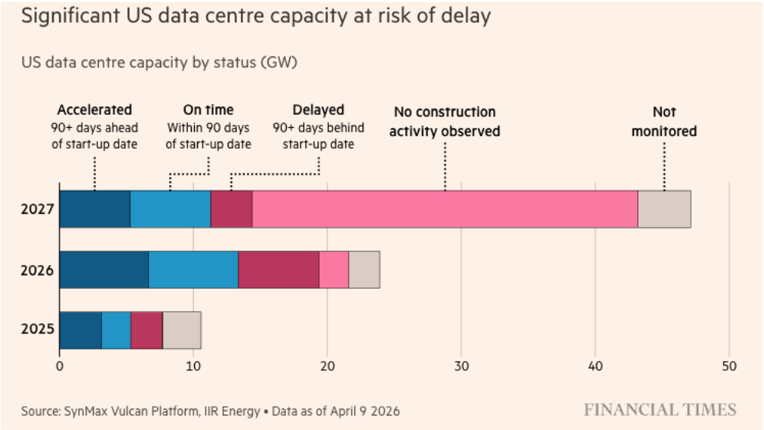
Figure 5: Financial Times. “Data centre delays threaten to choke AI expansion.” Accessed July 4, 2026.
Take a Dip, Not a Trip
Alright, you survived one of the longer discussions we’ve had this year, so I’ll wrap this up neatly for you. If you’re wondering, “Shelby, how isn’t everything you just mentioned just the noise you often tell us to ignore?” I’d say to you that something ceases to be noise when it reaches a certain level of consequence for a secular trend, something that almost singlehandedly drives explosive market gains and imbalanced pricing punishments. Now, I’m not suggesting you incessantly refresh your newsfeeds until the Winter Solstice. Just keep an eye out for opportunities. Rather than going full out-of-office on the market, consider checking in between splashes and margaritas.
Until next time,
Shelby


Related Posts

Hey Chat, Should I Take an Investment Holiday?

McFaddin on the Markets
The days are longer, temperatures are higher, and your winter coats and sweatshirts are hibernating...

Transparency Matters in AI, Relationships, and Even... ETFs
The word transparency might sound like one of those platitudes endlessly parroted in TikTok videos...

When Investing at All-Time Highs… Buy, Buy, Buy
When *NSYNC sang “Bye Bye Bye” in 2000, we can only assume the boy band wasn’t giving out...
Search the Insights Blog